
Skin Rejuvenation
Microneedling
Microneedling uses a device with very fine needles to make controlled micro-injuries in the skin, prompting its natural repair process. It is commonly discussed for texture, scarring, and fine lines.
- Category
- Skin Rejuvenation
- Recovery
- Redness for a few days is common
How It Works
Understandingmicroneedling.
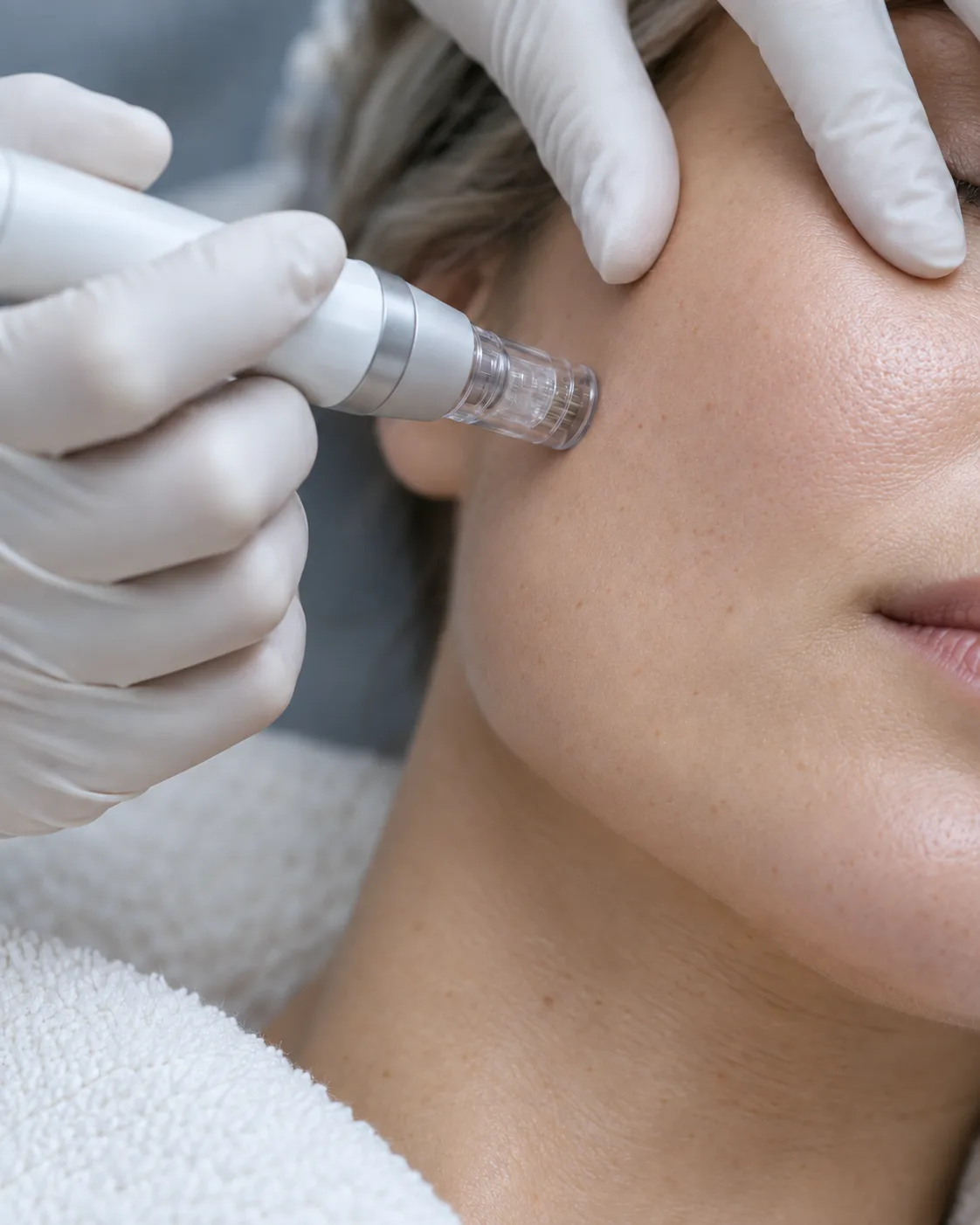
Microneedling — sometimes called collagen induction therapy — uses a handheld device with very fine needles, either a roller or a motorized pen, to create tiny punctures in the skin.
The skin responds to these micro-injuries by repairing itself, which includes producing new collagen. That repair happens gradually, so changes in the skin’s appearance develop over the weeks and months after treatment rather than immediately.
Needle depth, the areas treated, and how many sessions are suggested all depend on the concern being addressed and how your skin responds. These are decided with your provider, not set in advance.
Commonly discussed at consultation
- The concerns you’d like to address and the areas involved
- Your skin history, including scarring, pigmentation, and how you heal
- Current medications and skincare, including retinoids and isotretinoin
- What preparation, comfort measures, and aftercare involve
Concerns & Suitability
What microneedling is used for.
Microneedling is most often discussed for concerns related to the skin’s texture and surface, including:
- Acne scars
- Uneven skin texture
- Fine lines and wrinkles
- Enlarged-looking pores
- Uneven tone and dark spots
- Surgical or injury scars and stretch marks
Suitability is individual
Microneedling isn’t right for everyone. Published guidance advises against it with an active skin infection or cold sore, a history of keloid scarring, a bleeding disorder or blood thinners, pregnancy, or recent isotretinoin use, among other factors. Your provider reviews your history and skin before recommending it.
Your Appointment
What to expect.
-
Consultation and assessment
Your provider assesses your skin, discusses your goals and history, and explains whether microneedling is suitable and how it would be approached.
- Share your medications and recent treatments
- Ask whether to pause any skincare products and how to manage sun exposure beforehand
-
The treatment
Your provider cleans the skin and may apply a numbing cream for comfort. The device is then passed over each area; you may feel warmth or a scratching sensation, and areas near bone can feel more uncomfortable.
- Time in the chair depends on the areas treated
-
Aftercare and follow-up
Treated skin is usually red and may feel sunburned, tight, or slightly swollen; this commonly settles within a few days to a week. Your provider will explain aftercare and whether further sessions are suggested.
- Avoid makeup for about 24 hours
- Protect treated skin from the sun
General information only. Your provider will give instructions specific to you.
Microneedling FAQ
Questions aboutmicroneedling.
General information drawn from published guidance, alongside how bookings and pricing work here. Your provider confirms what applies to you.
View All FAQsSessions are priced individually, and a package is available — see the pricing on this page or our Pricing & Packages page. Your total depends on the number of sessions in your plan, which is confirmed before you proceed.
Related Treatments
You may also explore
Take the Next Step
Talk throughmicroneedling.
Book a consultation to discuss your skin, your goals, and whether microneedling is suitable for you.